
For refinery and petrochemical turnarounds, a tube bundle extractor is more than a pulling machine. It is part of the maintenance workflow for removing, supporting, transferring, cleaning, inspecting, and reinstalling heat exchanger tube bundles safely and efficiently.
A diesel tube bundle extractor is especially suitable for outdoor maintenance areas, remote units, and job sites where stable electrical power is not always available. With independent power, hydraulic pulling control, and mobile field operation, it helps maintenance teams reduce setup time and improve control during bundle extraction.
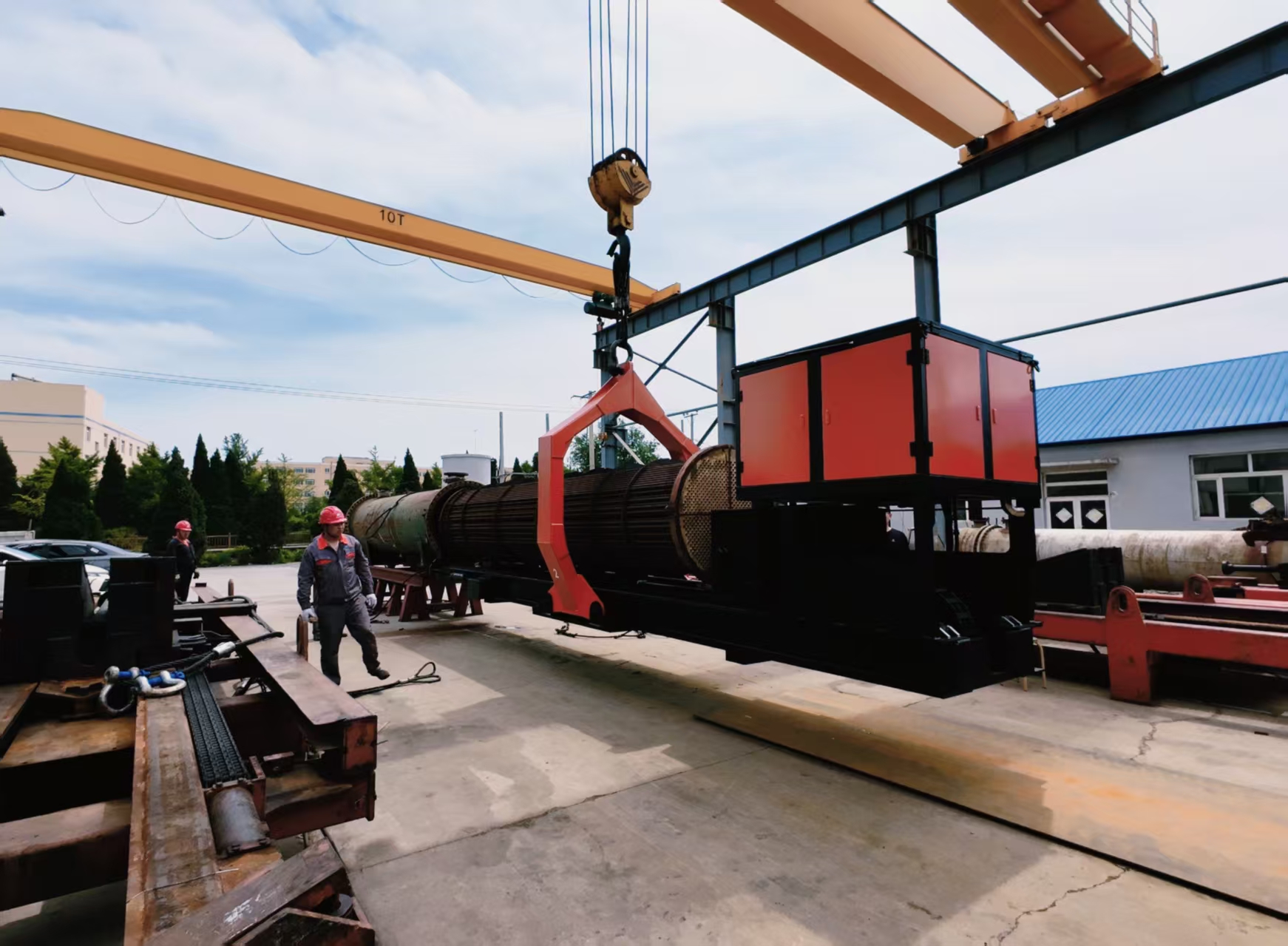
What Live Operation Shows
Live operation is one of the best ways to evaluate whether a bundle extractor is practical for real maintenance work. It allows the buyer to see how the machine supports the bundle, how smoothly the hydraulic system responds, and how stable the equipment remains during pulling and retraction.
- Pulling stability: the bundle should move in a controlled and predictable way.
- Support condition: the saddle and guiding structure should keep the bundle aligned.
- Operator control: hydraulic response should be smooth enough for precise adjustment.
- Field visibility: operators should be able to observe the bundle, exchanger face, and support points clearly.
Key Advantages of a Diesel Tube Bundle Extractor
Compared with equipment that depends on external power, a diesel-powered unit is easier to deploy in many refinery maintenance environments. This can be valuable during shutdown work when several exchangers must be serviced within a limited time window.
- Independent power: no need to rely on nearby electrical supply during field work.
- Strong mobility: suitable for moving between different heat exchanger locations.
- Outdoor adaptability: practical for refinery, petrochemical, and industrial maintenance sites.
- Controlled extraction: hydraulic pulling and pushing help reduce manual handling risk.
- Better job planning: a dedicated extractor helps organize cleaning, inspection, and reinstallation work.
Important Buying Factors
Before selecting a diesel tube bundle extractor, the buyer should confirm the actual operating conditions of the heat exchanger maintenance project. A correct model recommendation usually needs more information than only the bundle weight.
- Bundle weight: consider fouling, retained liquid, and safety margin.
- Bundle length: confirm the required stroke and overall working area.
- Bundle diameter: confirm saddle size and support method.
- Working height: check whether the exchanger is at ground level, elevated, or inside a structure.
- Site access: review road width, turning space, crane access, and bundle storage area.
- Power preference: choose diesel for mobility and independent power, or electric for cleaner and quieter operation.
Pricing Factors
The price of a diesel tube bundle extractor depends on technical configuration, pulling capacity, bundle length range, hydraulic system, control method, engine brand, structural requirements, and optional accessories. Customized requirements such as longer bundle support, higher working height, special transportation dimensions, or additional safety features can also affect cost.
For an accurate quotation, it is better to provide technical data and site conditions instead of only asking for a general price. This helps avoid undersized equipment and ensures the proposed model can match the actual exchanger maintenance work.
Information Needed for a Recommendation
To recommend a suitable configuration, please prepare the following information:
- Tube bundle weight, diameter, and length
- Heat exchanger layout drawing or site photos
- Required working height and lifting plan
- Project location and site environment
- Diesel or electric power preference
- Expected delivery schedule and quantity
Conclusion
A diesel tube bundle extractor is a practical solution for refinery and petrochemical heat exchanger maintenance, especially where mobility, independent power, and field adaptability are important. By reviewing live operation, confirming real site conditions, and evaluating key buying factors, buyers can choose a safer and more efficient model for turnaround work.